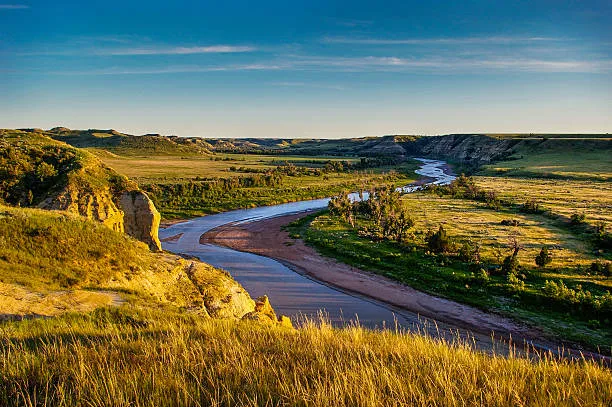
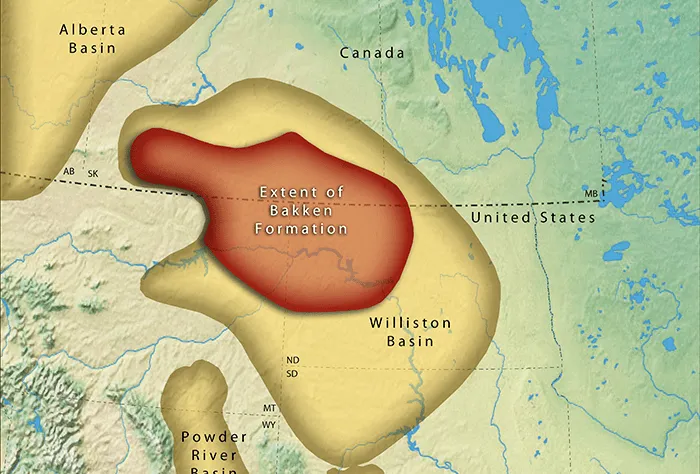
North Dakota has the geographical center of North America as a point of interest. There are vast rolling plains; wheat, alfalfa, sunflower, barley and oat fields across the state. On the western most part of the state is the Bakken formation and oil fields across the state beginning from about the center of North Dakota and increasing dynamically traveling west. There are very few cities in North Dakota and there are small towns scattered across the state in some of the most remote regions imaginable. With the oil fields, north Dakota has experienced growth and crime unlike ever expected. The Dakota Access Pipeline confrontation with the Dakota Sioux was an understatement of the North Dakota mentality. The badlands on the western side are an amazing site and one of the absolute must visit places as a tourist.
What is now North Dakota was inhabited for thousands of years by various Native American tribes, including the Mandan, Hidatsa, and Arikara along the Missouri River; the Ojibwe and Cree in the northeast; and several Sioux groups (the Assiniboine, Yankton, Wahpeton, and Teton) across the rest of the state. European explorers and traders first arrived in the early 18th century, mostly in pursuit of lucrative furs.
The Northern Pacific and Great Northern railway companies competed for access to lucrative grain centers; farmers banded together in political and socioeconomic alliances that were core to the broader Populist Movement of the Midwest. North and South Dakota were admitted to the Union on November 2, 1889, as the 39th and 40th states.
Beginning in the mid-20th century, North Dakota’s rich natural resources became more critical to economic development; into the 21st century, oil extraction from the Bakken formation in the northwest has played a major role in the state’s prosperity. Such development has led to unprecedented population growth (along with high birth rates) and reduced unemployment, with North Dakota having the second-lowest unemployment rate in the U.S. It ranks relatively well in metrics such as infrastructure, quality of life, economic opportunity, and public safety. It is believed to host the geographic center of North America, Rugby, and is home to what was once the tallest artificial structure in the Western Hemisphere, the KVLY-TV mast.
PRE-COLONIAL HISTORY
Native American people lived in what is now North Dakota for thousands of years before the arrival of Europeans. The known tribes included the Mandan people (from around the 11th century), while the first Hidatsa group arrived a few hundred years later. They both assembled in villages on tributaries of the Missouri River in what would become west-central North Dakota. Crow Indians traveled the plains from the west to visit and trade with the related Hidatsas after the split between them, probably in the 17th century.
Later came divisions of the Sioux: the Lakota, the Santee and the Yanktonai. The Assiniboine and the Plains Cree undertook southward journeys to the village Indians, either for trade or for war. The Shoshone Indians in present-day Wyoming and Montana may have carried out attacks on Indian enemies as far east as the Missouri. A group of Cheyennes lived in a village of earth lodges at the lower Sheyenne River (Biesterfeldt Site) for decades in the 18th century.
Due to attacks by Crees, Assiniboines and Chippewas armed with fire weapons[clarification needed], they left the area around 1780 and crossed Missouri some time after. A band of the few Sotaio Indians lived east of Missouri River and met the uprooted Cheyennes before the end of the century. They soon followed the Cheyennes across Missouri and lived among them south of Cannonball River.
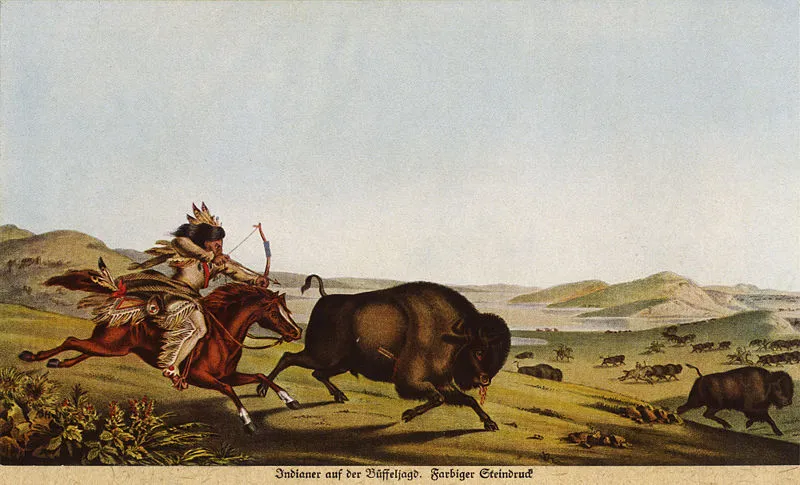
Eventually, the Cheyenne and the Sutaio became one tribe and turned into mounted buffalo hunters with ranges mainly outside North Dakota. Before the middle of the 19th century, the Arikara entered the future state from the south and joined the Mandan and Hidatsa. With time, a number of Indians entered into treaties with the United States. Many of the treaties defined the territory of a specific tribe.
Norwegian, German and Icelandic influences
Norwegian settlers in front of their sod house in North Dakota in 1898 Around 1870 many European immigrants from Norway settled in North Dakota’s northeastern corner, especially near the Red River. Icelanders also arrived from Canada. Pembina was a town of many Norwegians when it was founded; they worked on family farms. They started Lutheran churches and schools, greatly outnumbering other denominations in the area. This group has unique foods such as lefse and lutefisk. The continent’s largest Scandinavian event, Norsk Høstfest, is celebrated each September in Minot’s North Dakota State Fair Center, a local attraction featuring art, architecture, and cultural artifacts from all five Nordic countries. The Icelandic State Park in Pembina County and an annual Icelandic festival reflect immigrants from that country, who are also descended from Scandinavians.
Old World folk customs have persisted for decades in North Dakota, with the revival of techniques in weaving, silver crafting, and wood carving. Traditional turf-roof houses are displayed in parks; this style originated in Iceland. A stave church is a landmark in Minot. Norwegian-Americans constitute nearly one-third or 32.3% of Minot’s total population and 30.8% of North Dakota’s total population.
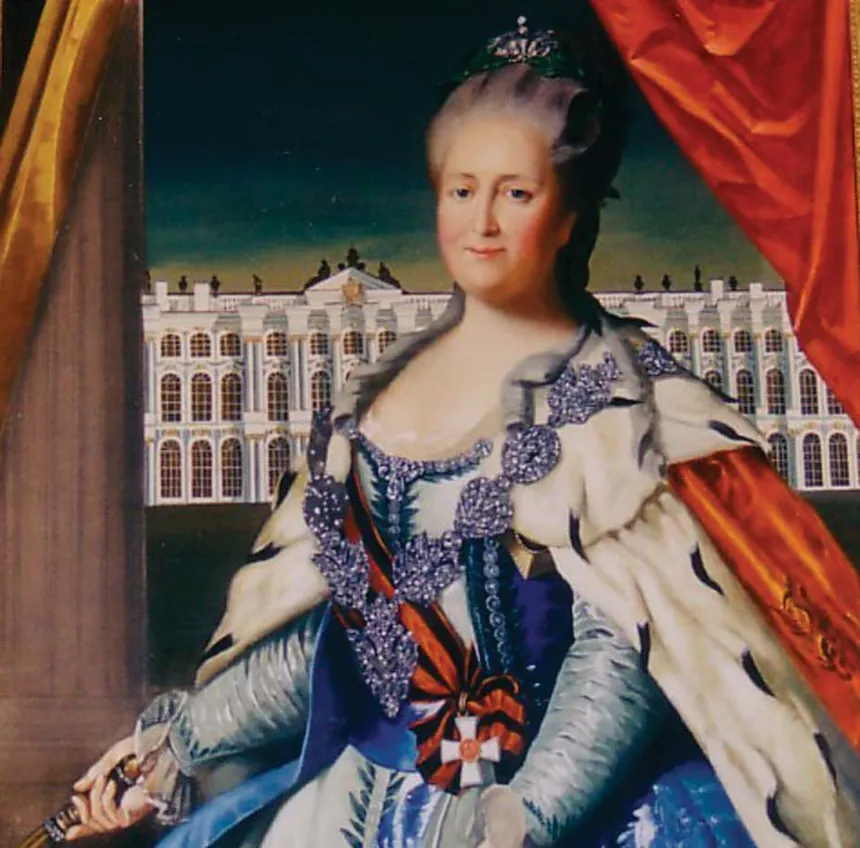
Germans from Russia had immigrated during Catherine the Greats reign, being dissatisfied with the socio-political climate in Russia. In the late 1800s, Germans from Russia flocked to North Dakota, living in towns such as Kulm, Strasburg, Ashley, and Wishek.1 By the end of the 19th century, approximately 70,000 German-speaking settlers from the Volga river region and German villages in what is now the Ukraine had moved to North Dakota. Today, half of North Dakota’s population has Russian-German roots.
It had been several years that my ventures remained in North Dakota. Regarding natural habitat, there are some of the most amazing wildlife and geological attractions of many other states. However, it is historically extremely cold during the winters with temperatures plummeting into the sub-zero ranges to as low as -40F and fluctuate drastically. The summers are mild with highs in the 90’s and most days are sunny, even during the winter.
Aside from the environment and air quality, there is very little otherwise. There is a certain level of barbarism evident in the culture which is one of extreme violence. Standing Rock and the DAPL was an entry level experience to the violence and ideology of the peoples of this region. The people are opposed to change on a vast majority, and many have never left the state. There is an overly assertive, yet fragile, ego factor among long time inhabitants that is protected with closed mindedness.
although now it is no bother. If that’s what you are,
celebrate it!